Videos on Scrum and Agile Project Management
Learn how to achieve multiple team collaboration in large scale software development projects. Self-organization is a key concept for all Lean-Agile methods. However, as projects expand across the enterprise and, more specifically, cut across multiple teams, teams clearly can’t just organize in any way they want to. A blend of top-down direction with bottom-up self organization is needed. Lean provides the insights necessary for teams to self-organize within the context of the value stream within which the teams work. A top-down perspective, created by driving from business value, can provide insights on how teams must organize and work together.
We would like solutions delivered fast without compromising quality, user experience, implicit requirements and non-functional aspects such as scalability and performance. This would have been easier, if we had all the time in the universe. Doing this in a sustainable manner becomes a huge challenge for teams as there are multiple competing forces at play and because software development is very complex.
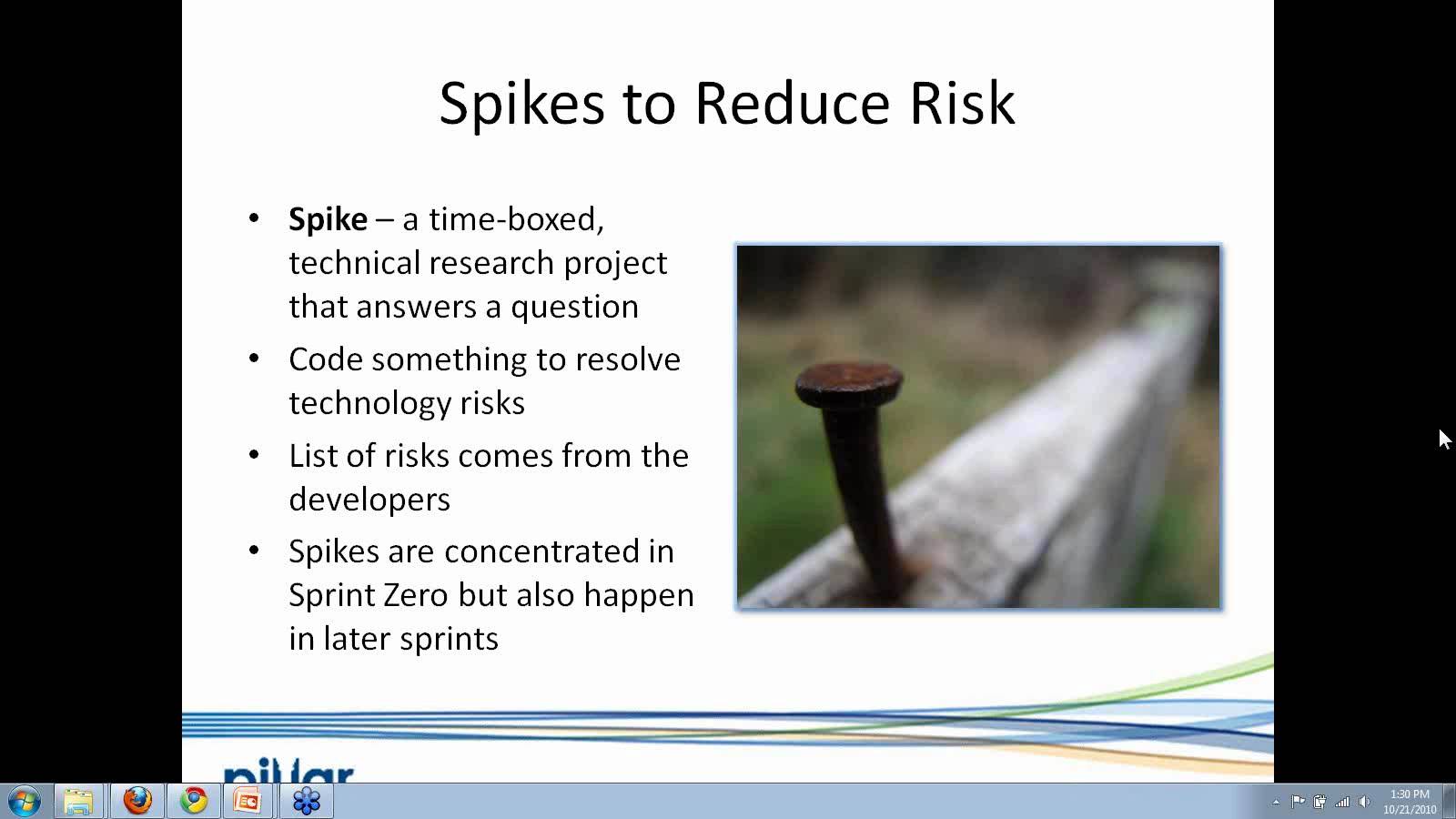
When you explain the iterative/incremental nature of Agile, most people coming from a waterfall lifecycle say “What? No up-front planning at all?” Some Agile coaches would glibly say yes, but the truth is more complex. Sprint Zero is an Agile term for a time-boxed amount of up-front planning. During Sprint Zero, you identify value stories, get a decent backlog of user stories and you do some architectural proof-of-concepts. The trick is to balance between insufficient planning and analysis paralysis.
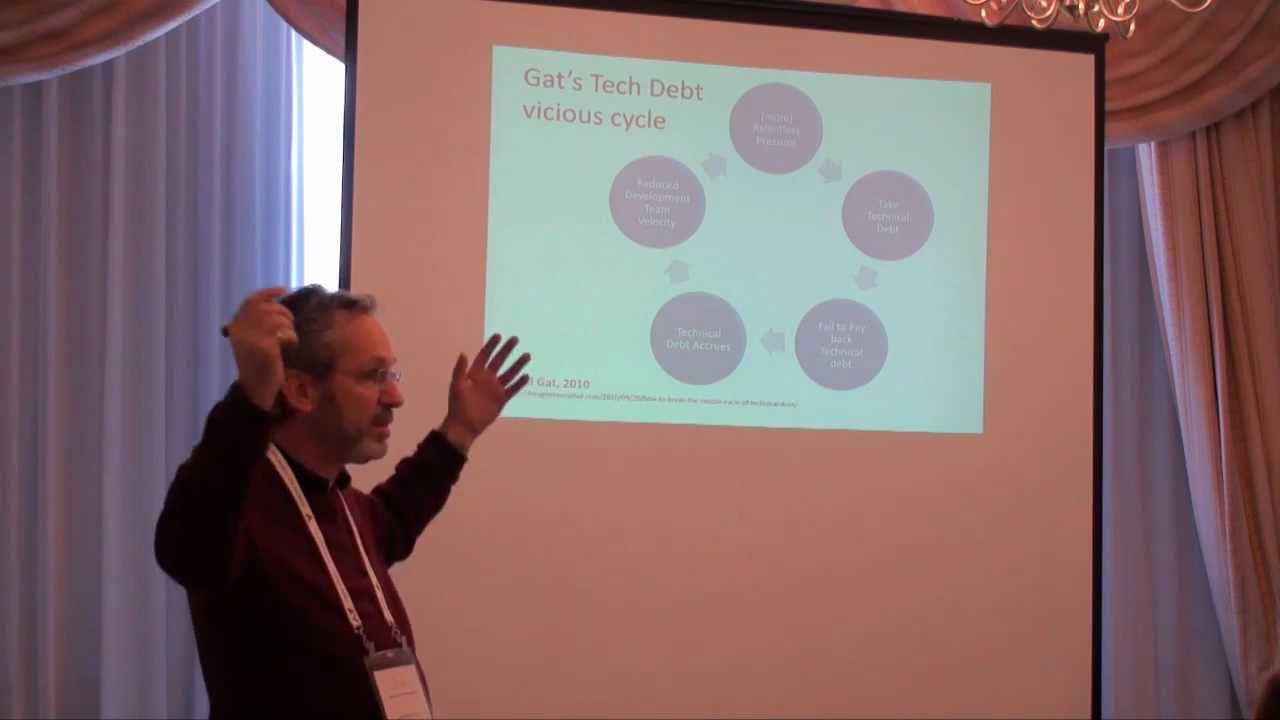
The nice metaphor of technical debt introduced some 18 years ago by Ward Cunningham has slowly taken roots in our collective conceptual toolbox, as a nice way to express some of the pains that software projects suffer from. Most software developers who have had some experience with significant, long-lived projects can feel it, sometimes point to it, but more than often can’t do much about it.
Pair programming is sometimes the norm, and some developers really enjoy the collaboration, experiencing enhanced productivity. In other teams, pairing is shunned, avoided, or… faked. Angela Harms did a short survey about pairing attitudes and compared successful and unsuccessful pairing experiences.
Agile estimating and planning in a Scrum software development project will not prevent your boss from asking: “Will you make the date?” This video explains how to use Scrum and the “Cone of Uncertainty” to provide an answer like: “60% probability.”
Fast turnaround in agile projects requires the specifications and testing processes to fit into to short iterations, which is a challenge for many teams when they start out with agile development.