People and team member management for Agile project management and Scrum software development teams.
When companies transition to Agile, it is not too difficult to find new roles for member of the current software development teams. Finding a place for middle management in the new organization is not so easy and some people even advocates to get rid of them. In this blog post, Em Campbell-Pretty brings her own middle management perspective to this discussion.
One of the technical practices of Agile software development is to support cross-functional teams where members perform multiple activities like requirements, coding and testing. In their book “Being Agile”, Leslie Ekas and Scott Will discusses the difficulties of creating a whole team.
Adopting new software development approaches like Agile and Scrum is always a challenge. There is a natural tendency for part of an organization to resist changing and some prejudices exist against Agile, mainly due to a lack of knowledge. This article discusses these misconceptions and provides some tips on how to overcome these prejudices to get Agile adoption on track in your organization.
If you asked software developers about Agile, there are chances that a majority will discuss it with words like “Scrum”, “sprints” or “retrospectives”. However Agile is not just a collection of techniques and practices, but it is more a state of mind or a culture. This is the topic of this book written by Pollyanna Pixton, Paul Gibson and Niel Nickolaisen.
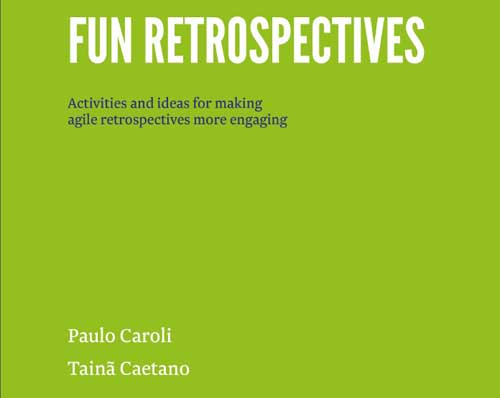
If you are following an Agile approach to project management like Scrum, you should have adopted a continuous improvement practice. Retrospectives are the name of the meeting when the Scrum team makes a pause to think on how to improve its current. Fun Retrospectives is a book that should help you to animate these meetings.
The role of the coaches and ScrumMaster is to give feedback to the members of the Scrum teams. In this article, Francesco Attanasio proposes a model based around the FEELING acronym: Facts; Emotions; Encouragement; Learning; Implications; New Goals.
The first value of the Agile Manifesto is ” Individuals and interactions over processes and tools”. Its third value is “Customer collaboration over contract negotiation”. In his book “Agile Analytics”, Ken Collier discusses the concepts of cooperation and collaboration in Agile.