Articles and videos on creating and managing cross-functional Scrum teams: scrum master, product owner and development team.
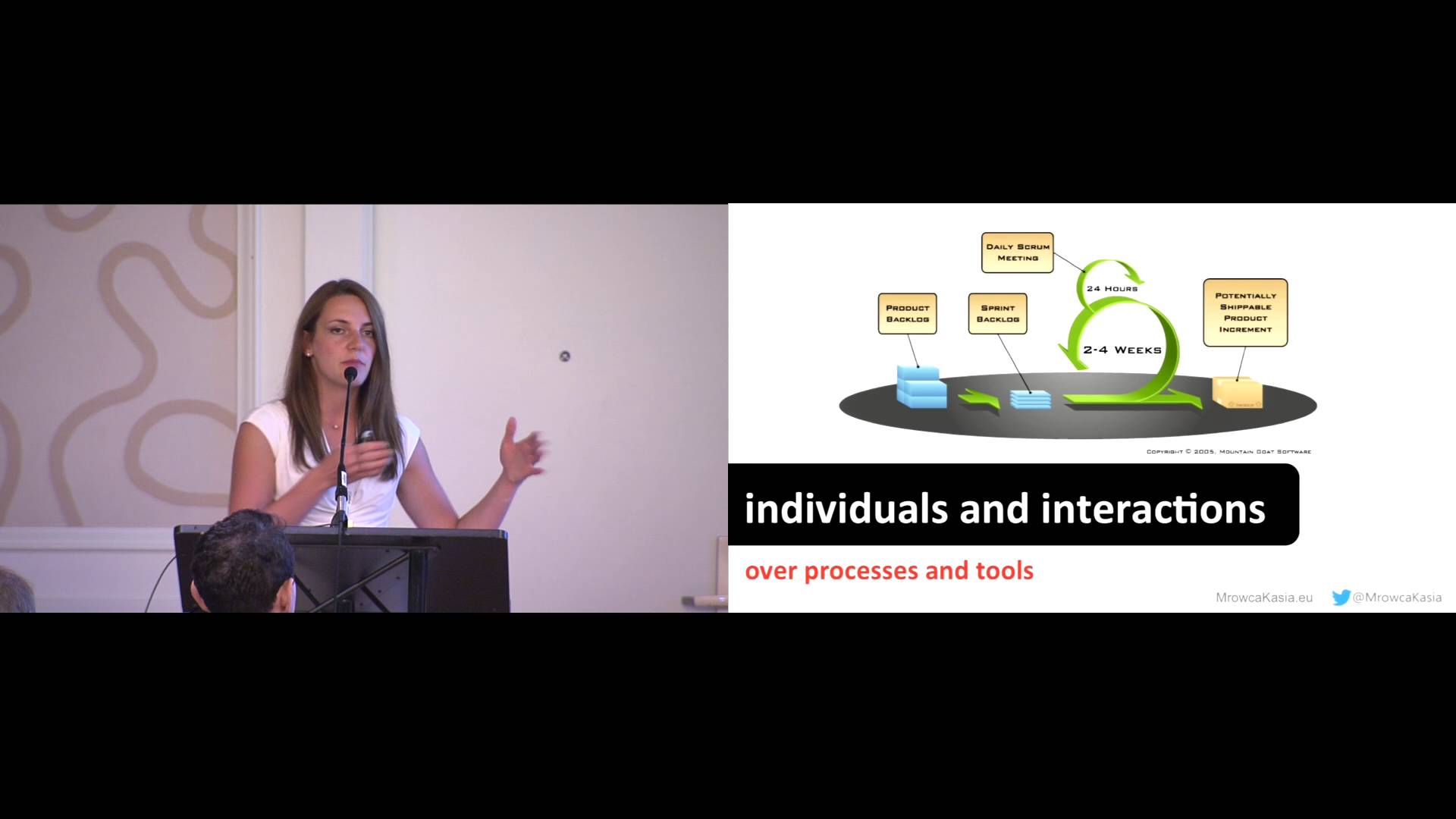
As stated in the Agile Manifesto, Agile software development is about “Individuals and interactions”. The importance of having a performing team where individuals collaborate is an essential factor for the success of software development projects. In his “Forming Agile Teams Workbook”, Jesus Mendez provides some tools that offer an alternative-proven way to add more structure, transparency and visibility to formation of Agile teams.
The Agile Manifesto says that “The most efficient and effective method of conveying information to and within a development team is face-to-face conversation”, but many meetings are a dull waste of time, even for Scrum teams.
Allan Kelly outlines the #NoProjects agenda and discusses the role of teams as the unit of production and the team life cycle. Good projects make for bad software. Software which is useful is used and demands change, stop changing it and you kill it. In a world without projects how do you manage work? The answer is teams. Teams are the means of production, work should be based around teams and teams should be stable.
Let’s challenge some of the commonly accepted patterns for software development teams. High degree of autonomy doesn’t turn into anarchy but rather help to keep intrinsic motivation high. Participatory leadership means that every team member is a leader yet it doesn’t mean competition. Decisions making process has nothing to do with power structures. Culture is paramount and it goes ahead of technical skills. Collaboration is ultimately the factor the whole team optimizes their work for.
Technical debt is a well-known concept in Agile software development. Technical Debt is defined as the eventual consequences of poor or evolving software architecture and software development within a codebase. In this blog post, Steve Blank discusses the concept of organizational debt.
Making decisions in groups like Scrum teams is our daily bread. Together we ponder over the right architecture, we select tools and set rules that we should follow as a software development team. In case of errors we discuss and decide how to get rid of them once and for all. We discuss, exchange point of views, bring arguments… or even yell at each other.
Agile is a now mainstream method used in IT project management. Yes, Agile and Scrum are now considered as a method and no longer as a philosophy. Everyone wants to “do” Agile and thus want to “be” Agile as well, but what are the common mistakes in applying Agile?