Articles and videos on creating and managing cross-functional Scrum teams: scrum master, product owner and development team.
When organizations start to adopt Scrum as their Agile project management framework, they have a tendency to put the customer in the role of the product owner. In this article, Patrick McConnell explains why this is a bad idea and that your client is not your product owner.
In this article, Henrik Kniberg and Anders Ivarsson present the story of scaling Agile at Spotify with over 30 teams across 3 cities. They describe the current organization at Spotify. The Squads are similar to Scrum teams. They are self-organizing teams and some use Scrum but other use Kanban or mixed approaches.
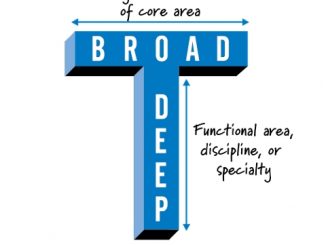
Self-organizing Scrum and agile teams need to determine how best to manage the flow of their work to get the job done each iteration. Flexible and high-performing agile development teams are composed of members with T-shaped skills and a Musketeer attitude that enable them to swarm to success.
As Agile and Scrum are increasingly used to manage software development projects in large companies, Nancy Nee, VP Global Product Strategy at ESI International, provides us with her viewpoint on how the transition to Agile is going on. She also shares some advice on how make the adoption process as smooth as possible.
In this blog post, J.D. Meier shares his experience of leading high-performance distributed teams for more than ten years at Microsoft. He describes a weekly schedule that begins with identifying 3 wins for the week on Monday to discussing 3 things going well and 3 things to improve on Friday.
This article from Rob Maher focuses on how to increase productivity. It discusses how changing a project staffing model could increase the productivity of project teams (PDF document). There is published evidence that short-lived groups of people brought together for a project are correlated with lower productivity. His view is that in an agile world, teams are permanent and the organization optimizes at the team level. Permanent teams enable consistent estimation, which is not possible using the matrix approach.
Scrum teams usually develop iteratively new product features. In larger project, teams can also be organized around layers or components of the product. In this article, Mukesh Chaudhary discusses how to manage the complexity with Scrum component teams and integration of their deliverables to make up a feature.