Resources on Scaling Agile frameworks like the Scaling Agile Framework (SAFe), LESS, Nexus, Disciplined Agile Delivery (DAD), Scrums of Scrums, etc.

The Scrum of Scrums is the key for scaling large, multidimensional projects that cross departments, teams, and traditional boundary lines so that can be managed using the same protocols and logic of a fundamental, small-team project. Bryan Zarnett explains that where most ScrumMasters fail in this large-scale environment is in the nuances of communicating and coordinating multiple teams. The same tool set used to run a small Scrum team cannot be used for a collective of teams. He defines the role of an Agile Program Manager (APM) that will coordinate the program portfolio and its dependencies and manage collective activities, issues, and risks. Regardless of design, the APM cannot operate 100 percent according to a Scrum textbook. Minor modifications to the tool set and the introduction of key new responsibilities will adapt and influence Scrum in minor ways that will allow the larger program context to be applied — and will allow teams to remain Agile even as size and interdependencies increase.
This article presents the IBM perspective on top five lessons learned about scaling Agile in a leading insurance provider. These lessons were that a team-by-team, incremental approach is best. Measurement and management tools can help you get and sustain executive buy-in and improve the development process. Mentoring and coaching should be provided for the process first and for the tools second. Integrated tools help demonstrate value. Retrospectives are essential for continuous improvement.
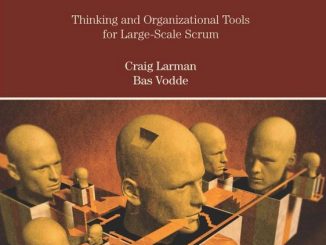
As Agile and Scrum are adopted by an increasing number of companies, “Thinking Tools for Large-Scale Scrum” from Craig Larman and Bas Vodde provides important thinking tools to remind us that it is more important to “be agile” than to “do agile”. Scrum or Lean are frameworks that we can use for continuous improvement of our software development process and not tools that should be applied blindly like cooking recipes.
In the episode 170 of the Software Engineering Radio, Bas Vodde explains how to apply agile principles to large and distributed development organizations. Bas shares his experiences on working in, consulting and coaching companies to adopt Scrum for large scale software development.
“After working for some years in the domains of large, multisite, and offshore development, we have distilled our experience and advice down to the following: Don’t’ do it.” “Scaling Lean & Agile Development – Thinking and Organizational Tools for Large-Scale Scrum”, Craig Larman & Bas Vodde, Addison -Wesley