Scrum Agile Project Management

Running an Agile Release Planning Meeting

May 8, 2014 0

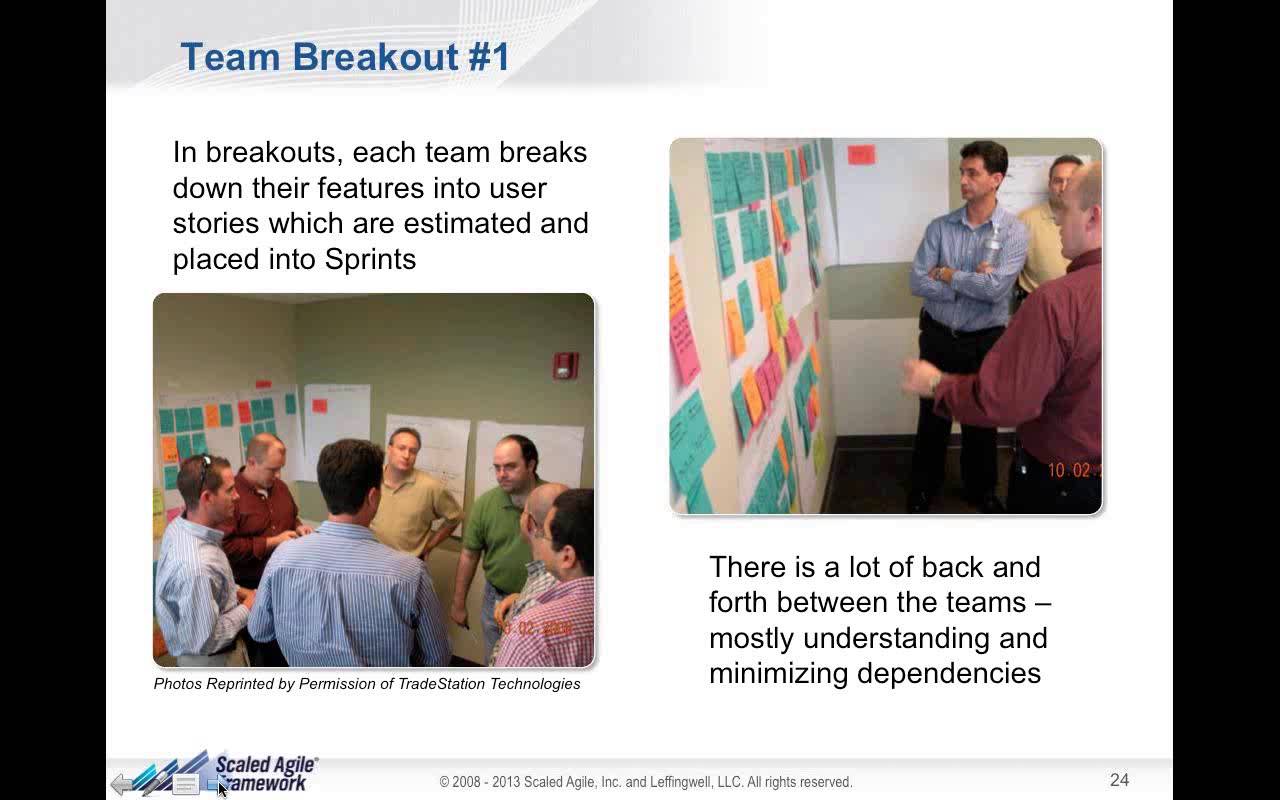
This presentation will help you understand what it takes to run a successful agile release planning meeting. The release planning is the “pacemaker” of enterprise agility and the Agile Release Train (ART) which aligns the Agile program to a common mission. Based on nearly a decade of experience, Dean Leffingwell and Scaled Agile have developed a process which has worked with small trains of 40 people to larger trains of 180. This video explains what it takes to run a successful Agile release planning meeting from a scaled point of view (100′s of teams).


Feature Board and Cards

April 14, 2014 1

Most of the Scrum teams use a task board to visualize their activity and progress with task cards. In these two blog posts, Keith Clinton, the author of Agile Game Development with Scrum, discusses the concept of feature boards and feature cards.

Are Your User Stories Ready to Be Done?

April 1, 2014 0

The definition of “Done” (DoD), which means that a feature is ready for delivery, is a concept often discussed in Scrum. In this blog post, George Dinwiddie discusses the concept of “Ready” that apply to user stories that are ready to be developed.

Using Job Stories Instead of User Stories

March 11, 2014 0

User stories and their format defined by Mike Cohn “As a , I want so that .” are a classical way to record requirements in Scrum project. In his blog post, Alan Klement discusses a new format that he called “Job Stories” with the format “When … , I want to … , so I can … .”

Roles In Scrum Are Not Only For Team Members

February 3, 2014 1

Agile practitioners are aware that Scrum has three roles: developer, ScrumMaster and product owner. In his book “Executable Specifications with Scrum”, Mario Cardinal also discusses how you can use the role notion in Agile to better understand stakeholders that have a different perspective, a concept that is also named “personas”.

User Stories Considered Harmful

January 7, 2014 0

Agile approaches have few proposed specific rules or techniques that have become de facto standards. One of these technique is to use the “as a <type of user>, I want to <do something>, so that <reason>” format to define requirements as user stories. In this blog post, Jim Bird discusses the idea that this user stories format is not the best way to manage requirements.

Practical Backlog Prioritization in Scrum

October 10, 2013 1

The prioritized product backlog is core to being Agile. A well prioritized backlog allows us to satisfy the customer through early and continuous delivery of valuable software at then end of each sprint in Scrum. Lean and Kanban may call it something else, but there too, prioritized work is key.

1 4 5 6 7 8