People and team member management for Agile project management and Scrum software development teams.
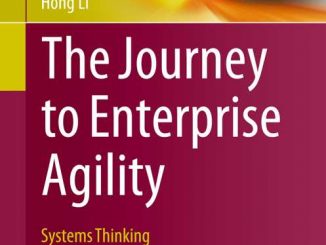
If the title of this book is a clear reference to the current trendy approach in software development, readers should be aware the that most important part is maybe in the subtitle “Systems Thinking and Organizational Legacy”. Not that Agile minds will be disappointed by reading it, but this book discusses the more important fact that from time to time software developers tries to adopt a new set of best practices and most of the time they fail.
An important part of agile leadership is improving communication between people. M. Spayd and M. Hamman are talking about shifting from directive – “managing for results” leadership style to catalysing – “designing environments that create results” style. Lyssa Adkins recommends avoiding asking ”Why don’t you…?” questions when coaching, as being too offensive.
One of the key benefit for organizations that adopt an Agile project management framework like Scrum should be the shortened value delivery cycle. Providing a quicker feedback, this should lead to continuous improvement the development process. This is however not always the case. In this article, Ronit Eliav discusses six issues that can cause static Agile.
Agile software development teams often use the notion of “velocity” to measure their ability at delivering value to the customer. In his blog post, Norberto Herz discusses the concept of “predictability” as a measure of the team’s health. His blog post starts with a series of interesting questions: can the company sell “predictability” to its customers? Is predictability a new application feature? Is predictability A team quality or a team goal?
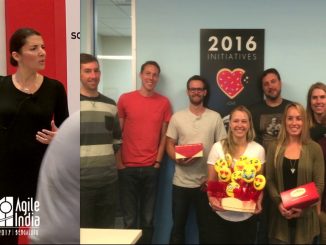
Who says you need “stable” Scrum teams in order to build a successful software company? While the addition or removal of one person from a team means you have a “new team”, there is a myth out there about “stable” teams. When your Agile team compositions change it doesn’t mean you’re doing it wrong – it could be the secret to your success. Different companies have thrived through reteaming – the act of moving people around teams in different ways. This talk goes over the what, why and how of reteaming and shares stories from different companies who are living this reality.
Some software development teams are orders of magnitude more effective than others, turning around business solutions in days or even hours. Their secret is a combination of smart technology choices, great development habits and a powerful team dynamic. This talk describes a number of patterns of behavior that have been identified working with some great teams, beyond the basics of colocation, stand-ups and pair rotation. You’ll gain a new appreciation for old techniques like code reviews, and even working in silos won’t seem so bad!
The Agnostic Agile Oath is a movement that aims at recognizing the importance of being agnostic with agility at any level. As it is stated on the web site: “one size does not fit all, one framework is not the answer, and the what’s and the how’s of what needs to be done, should be suited to customer context and to a wider strategic vision.”