Agile coaching for Scrum software development teams
When you look for inspiration in the Agile Coaching community, the name Gordon Ramsay is probably not the first name to come to mind. He has been known to be belligerent, condescending and downright rude, but underneath this brute facade is a treasure trove of skills and talents that influence change. This presentation draws insights from his ‘Kitchen Nightmare’ escapades and draw parallels with how much his work aligns with that of an Agile Coach and the goal to successfully drive change and introduce a number of models and techniques that are indispensable in the coaching toolkit.
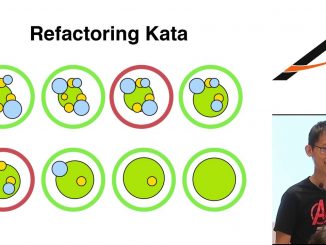
Agile technical practices like refactoring and TDD (Test-Driven Development) have become mostly mainstream in software development. However, software developers in many companies are either oblivious or have a different interpretation of these practices. As a software development coach, the interest of the presenter is to help developers adopt technical practices and being a mentor has played a big part.
TastyCupcakes is a community-run site that presents games, techniques and approaches that could be used by Agile coaches and ScrumMasters.
When do you need to stop coaching an Agile team? In his blog post “An Exit Strategy for the Agile Coach”, Len Lagestee discusses this question and explains how he will gradually work to be ready to leave and let the Scrum team be ready to carry the Agile values on its own.
There might exist some lonely standalone software developers that create software without any other person involved, but my guess is that there are not many of them. Communication is an essential skill in software development, testing and project management… and life. As feedback is a key communication tool, I was therefore very interested when I stumble on this book about feedback written by an Agile coach.
The ScrumMaster role might be the most difficult to define among the three roles involved in the Scrum team. Starting from a “bad” ScrumMaster job description, Agile coach Sam Laing discusses in this article the errors to avoid when you create a Scrum Master role specification. As a bonus, she provides at the end a good ScrumMaster job description.
Henrik Kniberg goes through a handful of concrete steps for diagnosing and debugging Scrum problems. He talks about using the process wrong, blaming the messenger, being impatient, not adapting the process or using the wrong process. Henrik Kniberg also introduces some new Scrum terminology such as Scrumdamentalism, Sadoscrumism, and Scrumbutophobia.