Agile coaching for Scrum software development teams
If today many people equal Agile with Scrum, the Agile approach is also deeply rooted in software engineering practices, like pair programming or refactoring, promoted by the eXtreme Programming (XP) movement. In this book, Emily Bache presents the Samman Technical Coaching approach. It is a method for helping software development teams to become more agile and raise the quality of their work.
As most organizations have moved from in-person to remote team Scrum coaching, the Agile coaching tool-set has had to adapt. This talk presents experience that has been gained so far and what are the tools that are most often used.
In this webinar, Anna Obukhova shares 4 practical tips that you can put into practice when working with tired or burnt out Agile and Scrum teams. A must watch for any coach working in a high-pressured team environment.
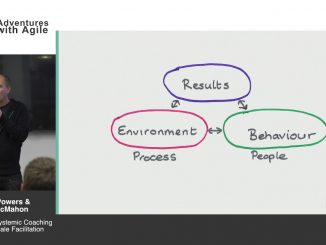
Learn how to promote self-organization in Scrum through systemic coaching and large-scale facilitation. Systemic coaching is a methodically guided self-reflection to consider systemic contexts of a concern from different perspectives.
Many people, even the people supposedly using Agile, have too much work to do. You have project work. You have support work, formal for customer support or sales, and informal for your colleagues. You have reports to write or file, time cards to fill out, or other periodic events. You know your multitasking is slowing down your work, making you crazy, and making it difficult to deliver your best work. You need a way to say no to more work.
As an Agile Coach or Scrum Master do you want to add energy to your team that looks not enthusiastic or resists change? Is it possible to cause harm to your team even with proper Agile coaching? Yes, if you are working with tired, exhausted or even burned-out teams, they do need special treatment, usually counterintuitive to the coaches.
How do you assess your skills as an Agile coach? An Agile coach herself, Karen Greaves proposes to define the coaching activity using 5 areas and 15 different items, a perspective that could naturally be adapted to your own context. This simple tool allows the coaches to reflect about their work and plan improvements.