Agile Scrum product backlog grooming and management by the product owner and the Scrum team: user stories, epics, sprint planning, etc.
Product backlog refinement (or grooming) is an important activity in Scrum projects where user stories are prioritizes, right-sized and estimated. In his book “Agile Reflections”, Robert Galen provides some hints about how to verify that that product backlog grooming has been done successfully and that the right requirements information is available for the next sprint.
It can be complicated to involve the whole team to facilitate product backlog refinement and take part in requirements discussions. I would like to suggest a structure of the PBR (product backlog refinement) meeting that will encourage everybody to speak up and share their ideas on functionality.
The product backlog might be the more important item for a Scrum team as it represents the business value that the project should deliver to its customers. Putting a priority on the features and user stories is however not always easy for the product owners, especially if they are dealing with multiple stakeholders. In this article, Samantha Laing shares a technique that can help to improve the results of this activity.
Business Analysis (BA) is a profession which is helping organizations to manage business transformation in an ever-changing and complex world. Business analysts work across the business change lifecycle; they develop early understanding of business needs. Their work leads to a situation where the right projects are funded for the right reasons.
Managing the product backlog and prioritizing the user stories if one of the main responsibilities of the product owners in Scrum. In this blog post, Andy Carmichael explains how to assess the priority of product backlog items using the cost of delay.
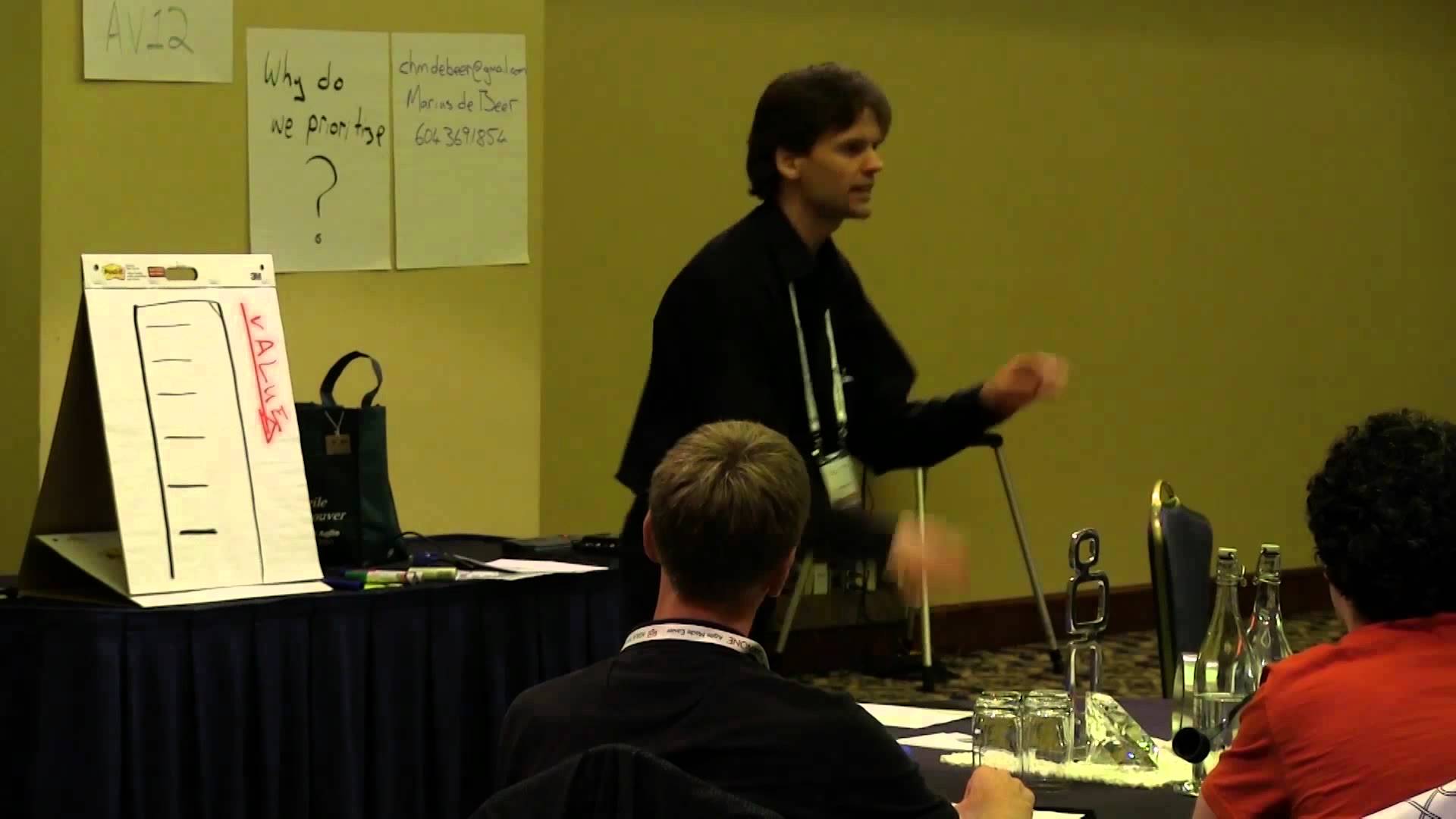
The prioritized product backlog is core to being Agile. A well prioritized backlog allows us to satisfy the customer through early and continuous delivery of valuable software at then end of each sprint in Scrum. Lean and Kanban may call it something else, but there too, prioritized work is key.
In a Scrum context, the definition of a “spike” is “a story or task aimed at answering a question or gathering information, rather than at producing shippable product.” In this article, Bill Ambrosini discusses how to manage them and when to use this activity.