

How do you get people to work effectively as a team? Instead of reorganizing every two weeks, maybe we should focus on what makes teaming work. Books and blogs focus on psychological safety, communications, trust, personal growth, and a shared purpose. These are good things to be sure, but how do you get there? I’ve experienced dysfunctional teams and apathetic ones more often than not; once burned, trust is not something easily given. How do you fix a broken heart and build a team? I think collaboration is your best approach, and should be encouraged whenever possible.
Author: Mark Haynes, https://www.linkedin.com/in/donald-mark-haynes-csm-745a609/
Scrum is an ideal framework for a collaborative approach. The Daily Scrum, also known as the Daily Stand-up, is a team support mechanism. The focus is on team goals, not on status reporting. The Retrospective encourages an open, honest assessment of what worked and what didn’t. It encourages self-empowered teams. A small team size reduces the likelihood of communication problems. Agile embraces the Servant Leadership principles. Still, Scrum teams have been known to fracture and break into isolated, antagonistic cliques.
Scrum is the start, but we need more than good intentions. We need to create a culture of agility and collaboration. Consider using collaborative approaches to increase your team’s effectiveness. Engage your team using collaborative techniques, such as workshops and Whiteboarding sessions. There isn’t a magic formula, but there are a few pathways you should consider.
Encouraging teamwork and collaboration
Why do Scrum teams fail? Are you implementing Agile in a vacuum? We need to create an environment where communication, collaboration, and an openness to alternative approaches are the norm. The main problem with the Status Meeting is that it focuses on the ME and not the WE.
Social networks are a great way to enhance your team’s collaborative spirit. If your organization doesn’t support these, consider ways to foster open communication and idea sharing. One of my teams started an Agile jeopardy before each Retrospective, as a way to help study for Scrum Certification. A friend of mine writes small snippets called “A day of Agile”. She takes a small idea from everyday life and turns it into a few paragraphs of Agile lessons learned. She publishes them internally. This is a great conversation starter.
Here are a few ideas to support a culture of agility:
- Chat forums, where issues can be shared, discussed, and recommendations solicited. Create separate groups for different categories, such as “All things JIRA” or “Killer Retro’s”. Assign Administrators to keep the content flowing and cordial.
- Create a document repository, or a Wiki, with useful articles, books, and links.
- Start a Book of the Month Club and discussion group.
- Establish a Lean Coffee or a Lunch & Learn session.
- Conduct Agile-focused team-building events.
- Obtain management support for professional group meetings, seminars, and conferences.
- Calendarize professional events.
Team Organization
A Scrum team is a framework for a collaborative team. Ceremonies are designed to encourage open communication and mutual assistance. Organize your team with relationships encouraging tighter working practices. Focus on building tighter working bonds based on shared goals. Let’s discuss a few ways you can do this.
Paired Programming
It’s a collaborative programming technique, championed in Extreme Programming, where one person codes and the other checks for accuracy. Then they switch roles. Seemingly counterintuitive, yet there are advantages:
- Onboarding new people,
- Knowledge sharing,
- Encourages communication, and
- Collaboration with a shared goal.
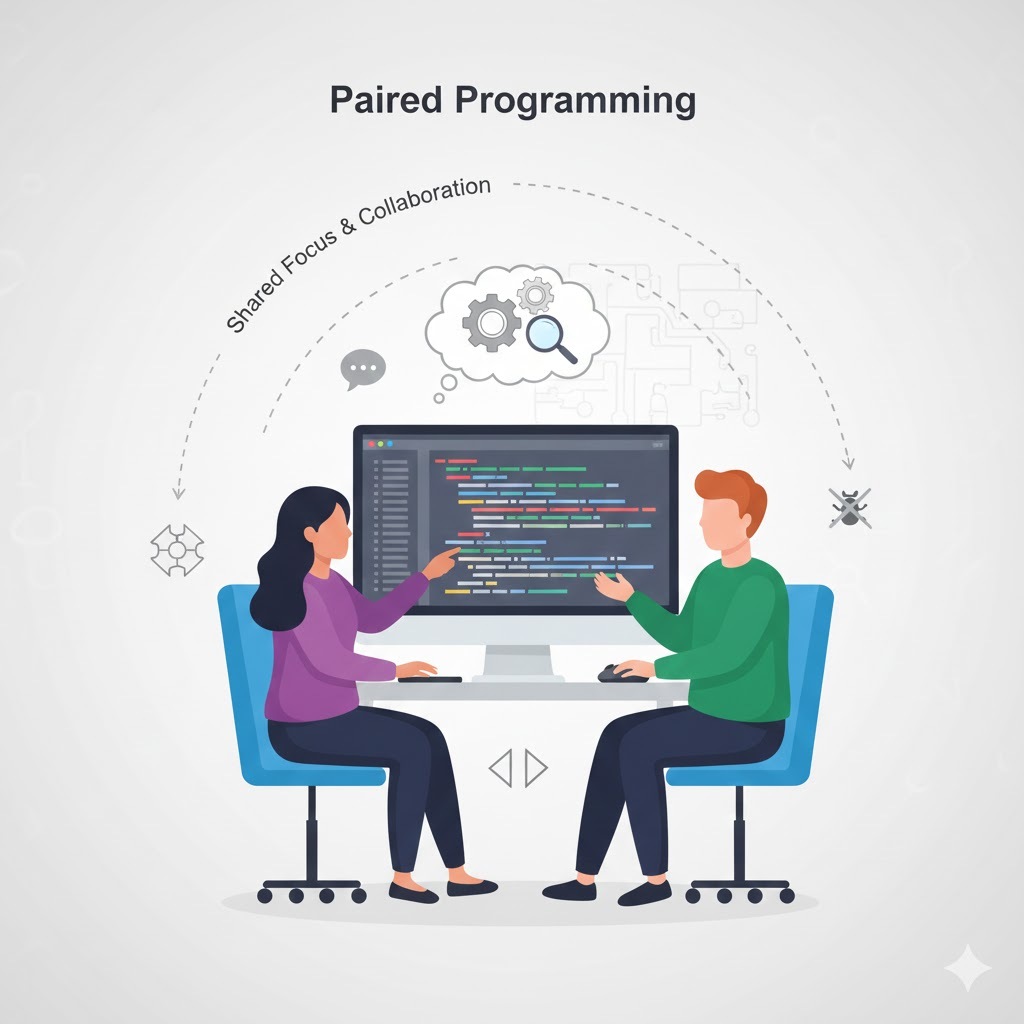
In my experience, Pairing can be effective, but one must be cautious. My first attempt was a disaster. I paired one of my senior QA Analysts with a new team member. The goal was to bring her up to speed on the functionality quickly.
She resented the fact that “I didn’t trust her.” This created a significant level of disharmony in the team. The lesson learned was that the senior member, or the more experienced one, should navigate, while the new member should drive. You need to assess the personalities. Some people are more comfortable working alone. Others are open to experimentation.
Sharing/Mentoring
This is a modified version of Free-form Pairing. A reality of a Scrum Master is turnover. How do you bring new team members up to speed and make them productive? Why not assign a senior team member to mentor a junior team member? Create a sharing-mentoring partnership.
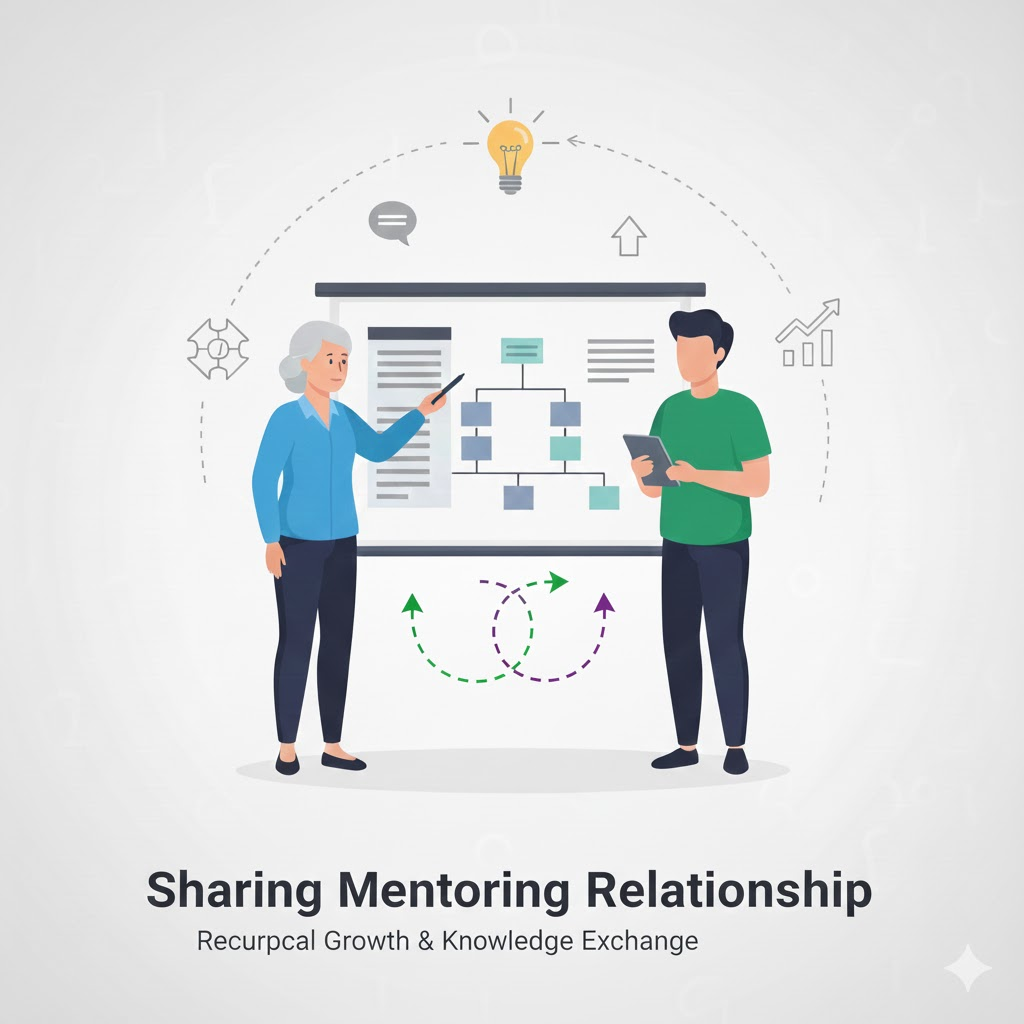
Onboarding is typically limited to orientation, mandatory training, and lots of paperwork. Onboarding of existing employees to a new team is usually nonexistent. This is insufficient from a team’s perspective. They need to be familiarized with how the team works. My solution was to create an onboarding User Story for the new team member. Their first Sprint or two is to learn. Assign them a partner to work on actual User Stories. Select fairly simple ones to start with. The goal is to get them up to speed quickly.
Bringing new people up to speed becomes a team responsibility. The Product Owner is responsible for explaining the business purpose of the application. The Tech Lead’s responsibility is to explain how the team technically does their job, e.g., migrating code to production, coding standards, etc… The Scrum Master imparts the team’s shared values, Scrum principles, and how the team communicates and interacts.
Traditional onboarding can span three to six months, and nearly 90% of employees decide to stay or leave within their first six months. When pairing new people with a mentor, assess the complexity of the work and the personalities. Seek out candidates for your mentorship program.
The Squad
The squad is a three to four-person team, focused on a single task or assignment. A Scrum team may be composed of several squads. Each person offers unique skills. Consider several variations, experiment, and see which one works for your team.
The Tripleting
A three-person squad consisting of one full-time developer, one part-time Business Analyst (or Product Owner), and one part-time Quality Assurance Analyst. One specifies the problem set and responds to questions, one designs and codes the solution, and one tests the solution.
Or,
A three-person squad consisting of programmers with unique specialties, such as a UX designer, a Back-end database expert, an API specialist, or a testing specialist.
Encourage your team to use the User Story as a communication vehicle, especially for remote teams.
Mob Programming
It is a collaborative approach to software development where a group of developers work together in real time on one task, in the same space, on the same computer. This is a modified driver-navigator workflow. The mob is a group of developers working together. They are responsible for discussing multiple alternatives and selecting the best course of action.
- The navigator is responsible for listening to the discussion and communicating instructions to the driver.
- The driver converts the instructions into code.
- The Champion is a facilitator. They identify the tasks, achieve consensus, and provide instructions.
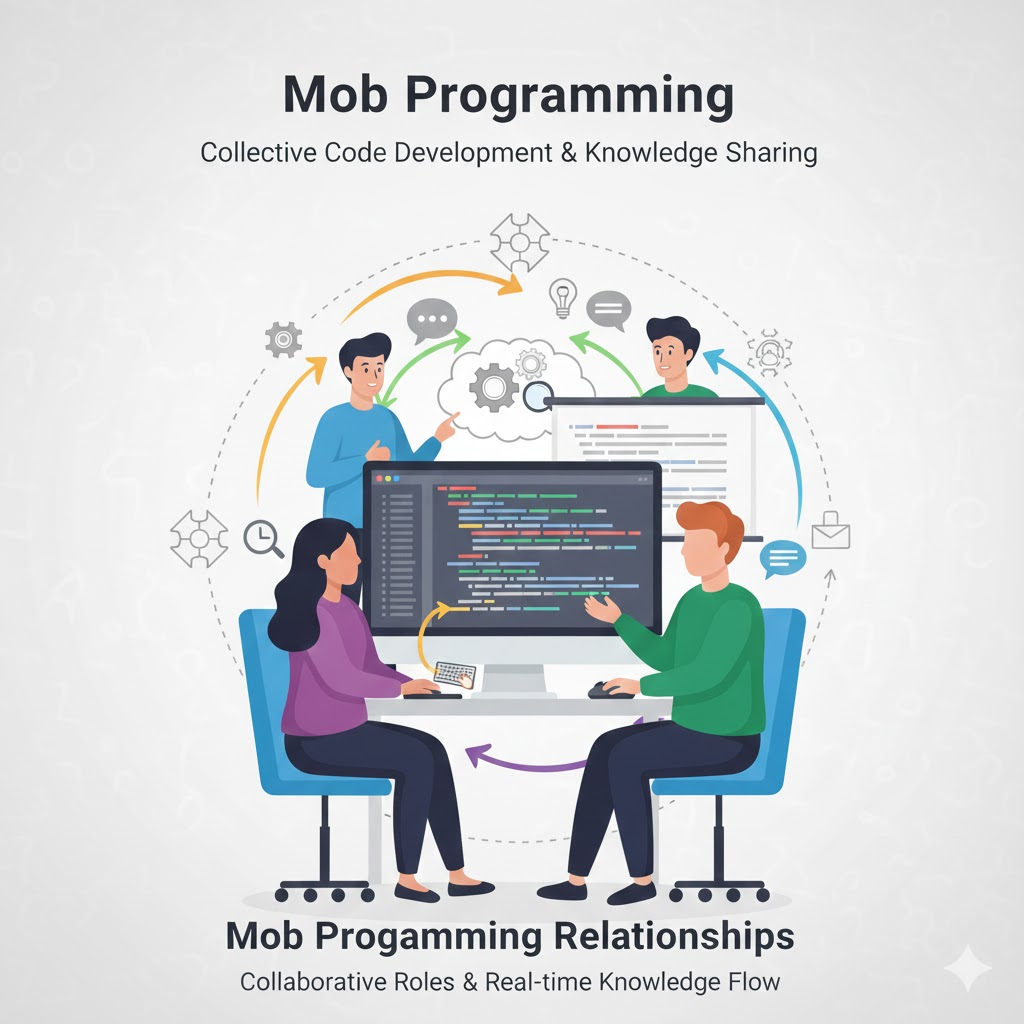
I haven’t used Mob Programming, but it has some interesting advantages. Maybe it’s not for every team. Experimentation is the spice of an Agile team. At a minimum, consider it as a team-building exercise:
- Enables continuous learning,
- Ensures coding standards are met,
- Overcomes individual weaknesses,
- Provides instantaneous feedback, and
- Enables continuous work.
Collaberative Analysis
Collaborative sessions bring different perspectives and expertise together to troubleshoot ideas and create innovative solutions. As the Scrum Master, I initially act as a facilitator. I’m often asked, “Do you need to be a part of every Whiteboarding session?” Once the team is comfortable with the technique, they are free to hold break-out sessions, calling me in when issues arise.
As a Scrum Master, I’ve found it beneficial to be familiar with many techniques and apply them as the situation merited. Experiment with different ones as the situation warrants.
Whiteboarding
Most of us think visually. Whiteboarding is an intuitive technique for conveying complex concepts quickly and effectively. Whiteboarding is a powerful tool. It can be very powerful when paired with other analysis tools. It works best with a small group, brainstorming ideas, resolving specific issues, and gathering information.
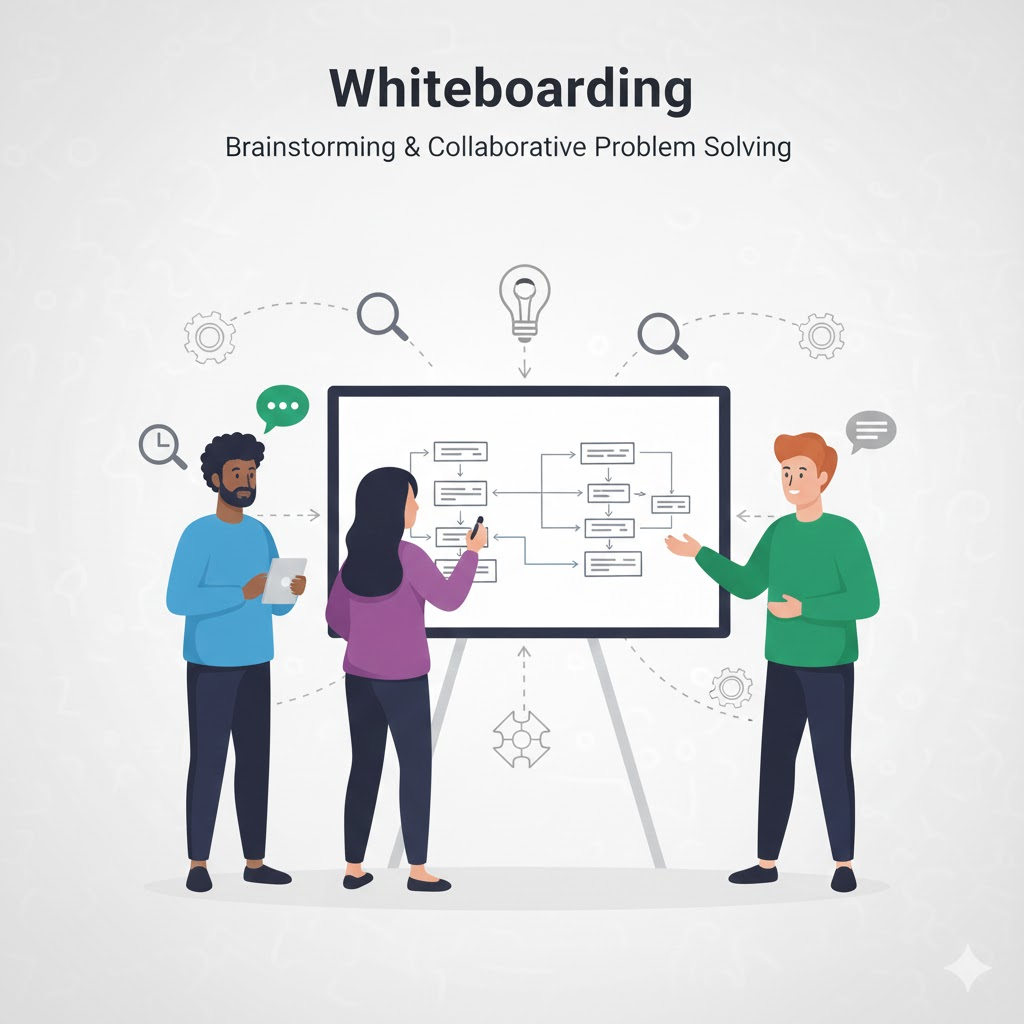
I think it’s best to establish a few ground rules:
- Publish an agenda,
- Identify a facilitator,
- Time-box the session, with a short timeframe (30 min to an hour),
- No ideas are bad, but some must be parking-lotted,
- Reserve a room with a big whiteboard, big ideas need big spaces, and
- Review the finished product with the team.
Consider pairing Whiteboarding with additional techniques to add a bit more structure to your sessions.
Mind-mapping
Mind-mapping is a visual imagining tool. It starts with a central idea at the center of the board, and related concepts radiate outward. Each sub-idea branches out and is repeated into finer and finer detail. In this way, complex ideas can be deconstructed into functionally simpler concepts.
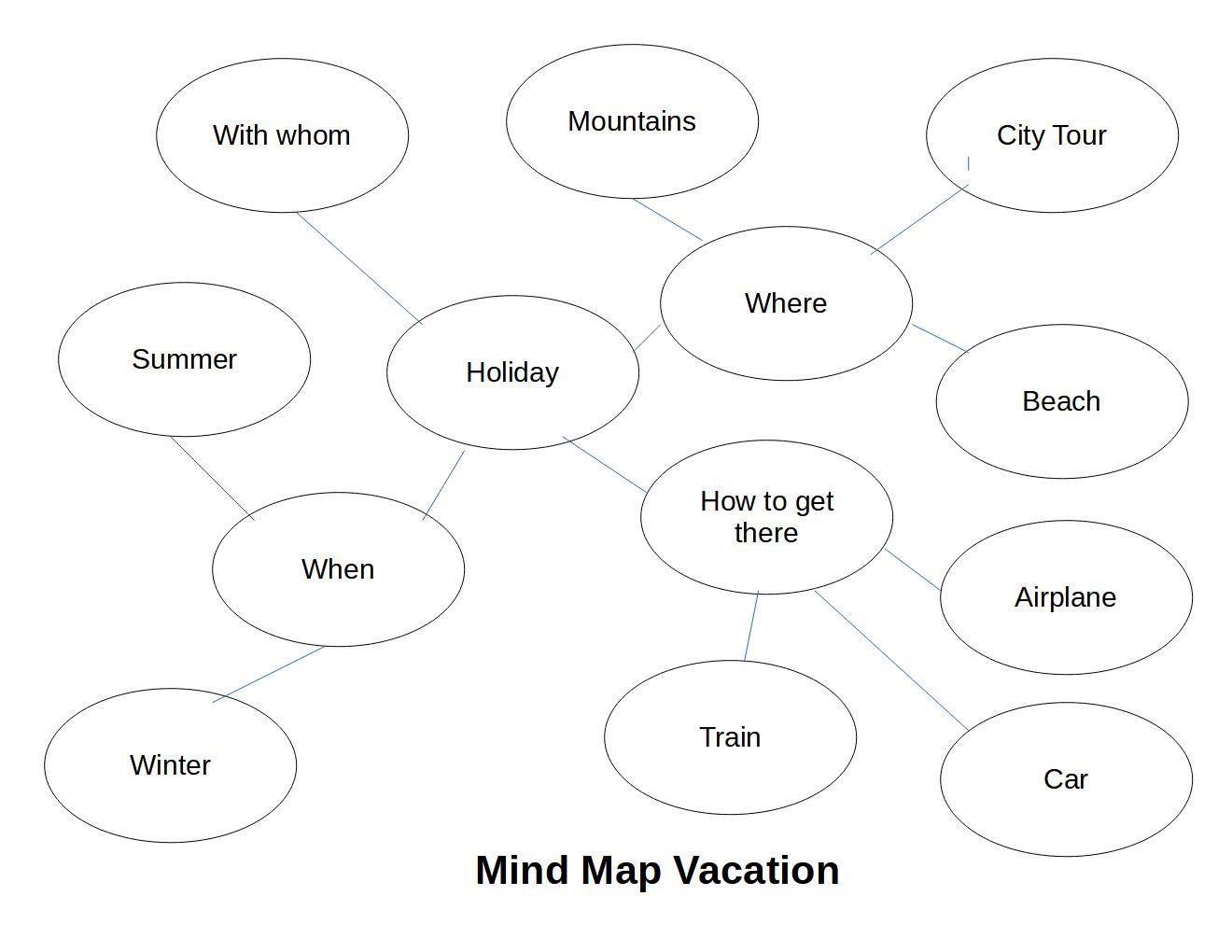
I was helping a newly minted Project Manager with her Project Plan. She inherited a cumbersome work breakdown structure with a significant number of irrelevant tasks. It was a holdover from an obsolete Software Development Life Cycle process, no longer supported. We used a simple mind map to break down the functionality required. It greatly simplified her project plan.
Modified JAD sessions
A Joint Application Development (JAD) session is a collaborative analysis and troubleshooting technique to gather requirements and resolve issues. It’s a structured workshop where developers and stakeholders creatively produce requirements.
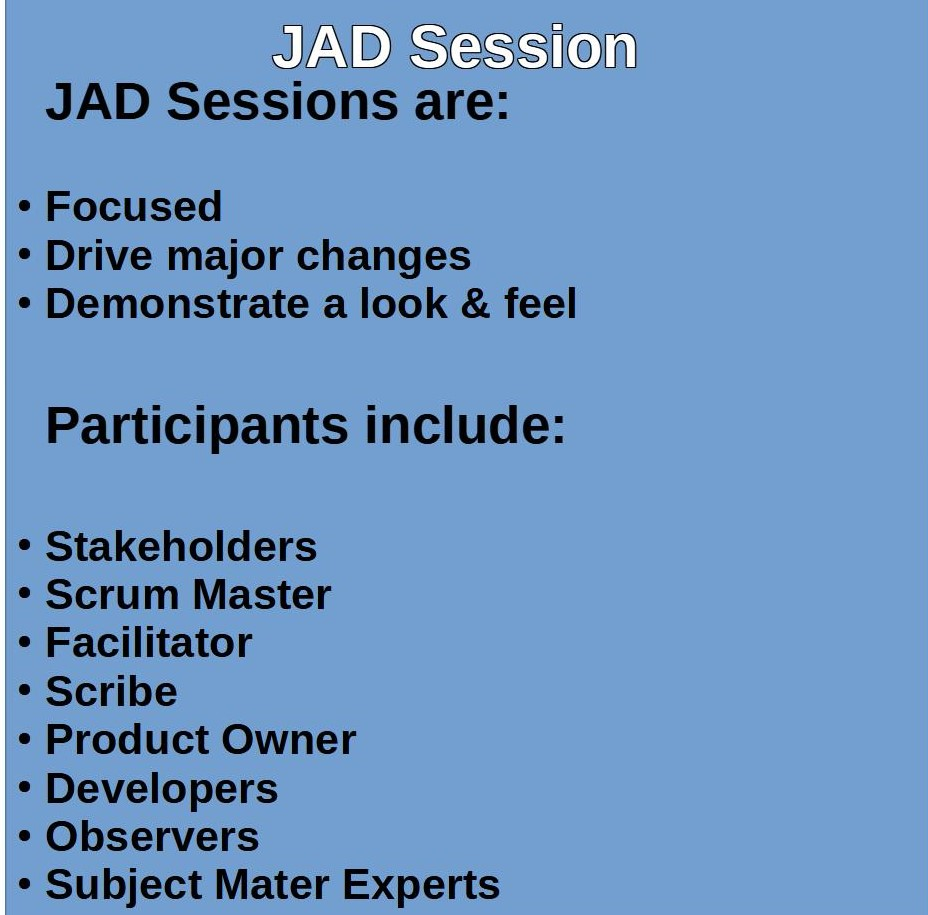
My team was faced with developing User Stories based on poorly understood functionality for a rewrite of a warehouse logistics application. Embrace the power of the room. Our mandate was clear (as mud): rewrite the Warehouse application based on its current functionality. We went to the Whiteboard with the Business Analysts, lead programmers, and the Product Owner. Where do you start? My answer. Anywhere in the process. Copy down ideas on a Whiteboard. We used a flow chart, but sticky notes will work. Capture as much as you can. When finished, one of the BAs wrote up the results and presented them back to the team. Rinse, wash, repeat. The results were presented as a Happy path (ideal scenario) and Exception paths (error processing). User Stories can then be spun off from the process charts. As a final product, a Use Case can be created.
Yes, I know I just described the Rational Unified Process (RUP), and that’s horizontal, not vertical slicing. I like Use Cases. Don’t be afraid to experiment. Scrum is a framework and fairly agnostic to other methodologies. It puts User Stories into context.
User Personas
A User Persona is another way to model a complex system. It’s a fictional user type that contains details providing a picture of how the product, service, or experience is being used. A Product Owner may be focused on the customer. The Scrum Master is focused on the team. The Developers are focused on the functionality. The User Persona is a collaborative effort representing a variety of different perspectives on how the functionality will be used.
RAID Analysis
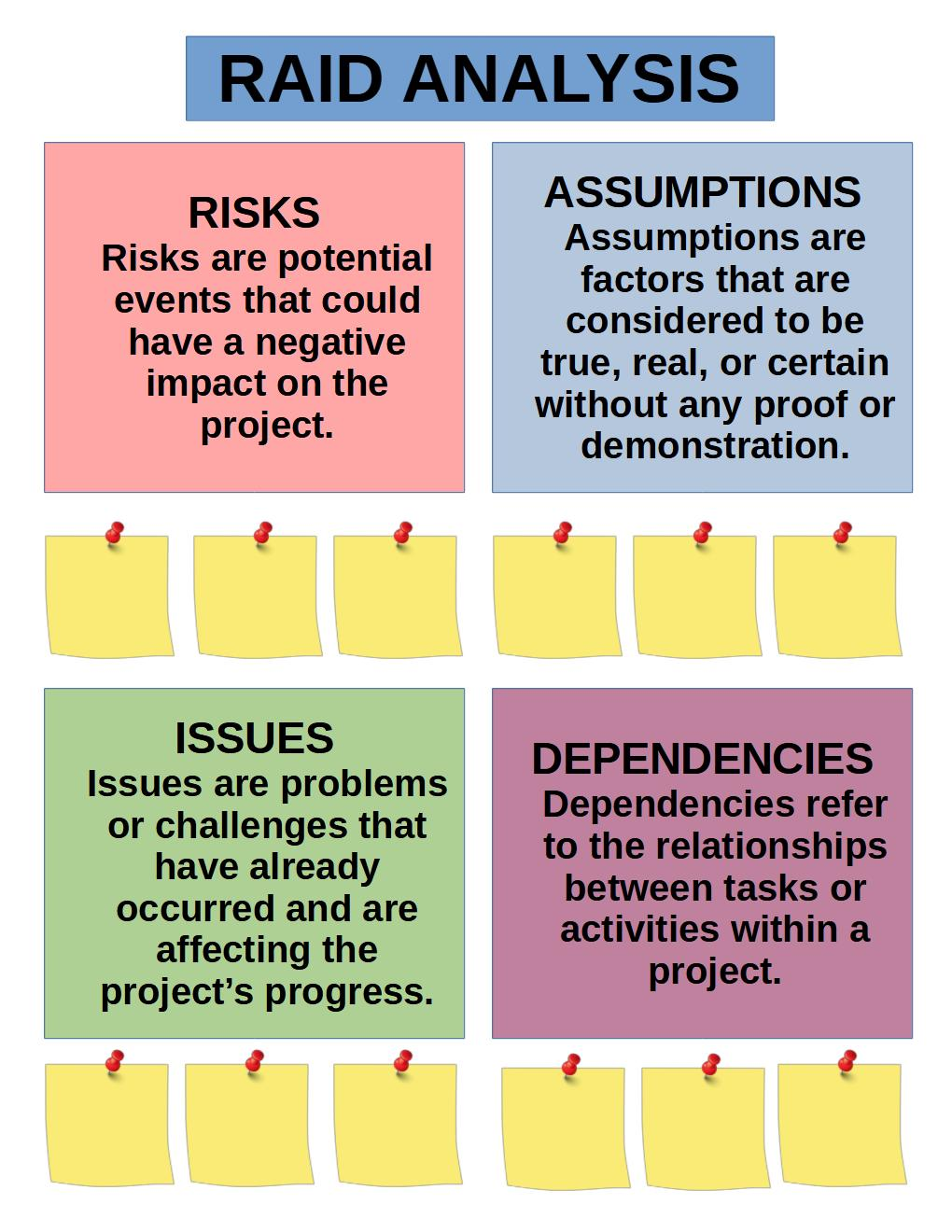
I have found it helpful to conduct a RAID analysis workshop on a whiteboard with sticky notes. There are four columns: Risks, Assumptions, Issues, and Dependencies. Each has a specific definition. The team is asked to generate as many as they can think of. They are written on sticky notes and placed into their appropriate columns. Later, the results are examined, condensed, and put in their respective columns. The results are published to the team. This will help the team identify Dependencies between tasks, Issues to be researched, and Assumptions to be verified.
Conclusion
At what point do developers start getting in each other’s way? What are the root causes impeding the flow of work for implementing requirements: communication issues, working at cross-purposes, competing solutions?
As our work becomes increasingly dependent upon the output of others, collaboration is an ideal way to optimize teams for effective communication and the efficient completion of tasks. It is by no means simple or easy.
All these techniques are methodology agnostic. This is not meant to be prescriptive. Many of these approaches are not agile-specific and were developed for Waterfall Project Management. Be open when looking for new (old) ideas. Did you find an approach that helped you collaborate more effectively?
References
Staff Writer. (2025, February 20). Indeed. Teamwork and Collaboration: How to Improve Both at Work. https://www.indeed.com/career-advice/career-development/teamwork-and-collaboration
VanZandt, Paul. (2023, February 2). IDEASCALE. What is Team Collaboration? Definition, Importance, Benefits, Examples, and How to Improve. https://ideascale.com/blog/what-is-team-collaboration/
Welteroth, Elaine. (2022, June 19) Masterclass. Teamwork vs. Collaboration: 7 Key Differences. https://www.masterclass.com/articles/teamwork-vs-collaboration
Simon, Becky. (2017, August 28). SmartSheet. A Winning Combination: Collaboration Teamwork Equals Teamwork and Collaboration. https://www.smartsheet.com/collaborative-teamwork
Bhangoo, Tenvi. (2020, July 13), How To Structure Your Tech Team – And Continually Reevaluate That. Forbes Technology Council https://www.forbes.com/councils/forbestechcouncil/2020/07/13/how-to-structure-your-tech-team—and-continually-reevaluate-that-structure/
Hannay, Jo E. Dyba, Tore. Arisholm, Erik. Sjoberg, Dag I.K. (July 7, 2009). The effectiveness of pair programming: A meta-analysis. Information and Software Technology, Volume 51, Issue 7. Science Direct. https://www.sciencedirect.com/science/article/abs/pii/S0950584909000123
Demkowicz, Marcin. (September 28). Whiteboarding: the definitive guide. Share the board. https://sharetheboard.com/blog/whiteboarding/
Gillis, Alexander S. Technical Writer and Editor. (March 30, 2023). What is mob programming?. TechTarget Search Software Quality. https://www.techtarget.com/searchsoftwarequality/definition/mob-programming
Gillis, Alexander S. Technical Writer and Editor. (June 28, 2021). Pair Programming. TechTarget Search Software Quality. https://www.techtarget.com/searchsoftwarequality/definition/Pair-programming
He, Grace. (February 12, 2025). 9 Examples of Collaboration Skills. Teambuilding.com. https://teambuilding.com/blog/collaboration-skills
Robinson, Angela. (January 14, 2025). Collaboration: Definition, Examples & Tips. Teambuilding.com. https://teambuilding.com/blog/collaboration
Thompson, Susan. (September 11, 2025). How Long Is the Onboarding Process? Small Business Trends. https://smallbiztrends.com/how-long-is-onboarding-process/
Athuraliya, Amanda Communications Specialist. (September 24, 2024) .What is a Mind Map? Definition, Uses, Benefits, & Examples. CoCreately. https://creately.com/guides/what-is-a-mind-map/
Dennison, George, Chief Product Officer. (not dated). A Real Look Inside a JAD Session, and Why it Still Works in 2025. PM Repo: The Largest Product Job Board.https://www.thepmrepo.com/articles/a-real-look-inside-a-jad-session-and-why-it-still-works-in-2025
McKay, Michael C. (not dated). Understanding the Significance of a Jad Session: A Comprehensive Guide. DigitalGadgetWave. https://digitalgadgetwave.com/understanding-the-significance-of-a-jad-session-a/
Dworniczak, Mariusz (Mario), PMP, Senior Technical Program Manager. (January 8, 2025) Joint Application Design (JAD) Session Explained. Linkedin. https://www.linkedin.com/pulse/joint-application-design-jad-session-explained-dworniczak-pmp-eecmf/
Codecademy team. (Septemer 9, 2021). What is Paired Programming? Codecademy https://www.codecademy.com/resources/blog/what-is-pair-programming
Avendano, Daniela. (August 2, 2024). Joint Application Development. Toolshero. https://www.toolshero.com/information-technology/joint-application-development/
Staff Writer. (not dated). What is a Project Manager? PMI Project Management Institute. https://www.pmi.org/about/what-is-a-project-manager
Martin, Paula. Tate Karen. (April 2000). What is a Project Plan? PM Network. https://www.pmi.org/learning/library/project-plan-assembly-elements-summary-3128
Turdibayeva, Kazyna. (August 20, 2024). What is Happy Path?. Process Maker. https://www.processmaker.com/blog/what-is-a-happy-path/
Tasker, Dan. (February 22, 2025). Happy, Alternate, and Exception Paths are Applicable to More Than Just Use Cases. Modern Analyst. https://www.modernanalyst.com/Resources/Articles/tabid/115/ID/6675/Happy-Alternate-and-Exception-Paths-are-Applicable-to-More-Than-Just-Use-Cases.aspx
Staff writer (not dated). Rational Unified Process. ScienceDirect. https://www.sciencedirect.com/topics/computer-science/rational-unified-process
Multiple authors. (on-going). Persona (User Experience). Wikipedia. https://en.wikipedia.org/wiki/Persona_(user_experience)
Eby, Kate. (November 3, 2023). Mastering RAID Analysis for Effective Project Management. Smartsheet. https://www.smartsheet.com/content/raid-project-management
Potter, Jaime. (2020, April 27). Forbs. The Ideal Team Size At Work May Be Smaller Than You Think. https://www.forbes.com/sites/jaimepotter/2020/04/27/the-ideal-team-size-at-work-may-be-smaller-than-you-think/2021
About the Author
I am a renaissance man trapped in a specialist’s body. I started as a biologist and that’s why I became an IT guy. I love science, but it doesn’t pay the bills. I have been an IT professional for many years. I used to be a software developer with an elegant language for a more civilized age. I became a Quality Assurance guy because it’s better to give than receive. I have been a process improvement specialist because it’s easier to negotiate with a terrorist than a Methodologist. But lately, I’ve been working as a Scrum Master and Agile Coach. I have drunk the Kool-Aid and it tastes good. Agile is a philosophy, not a methodology. In interviews, people often ask how long you’ve been Agile. My answer is always. I just didn’t know what it was called before.
What collaborative Scrum practices does the article highlight as essential for fostering teamwork and open communication within a Scrum team?