Videos on Scrum and Agile Project Management
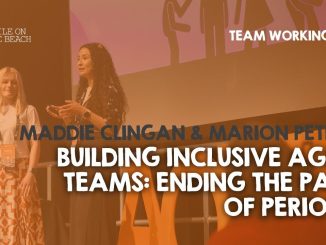
The unmentionable cycle time.. menstruation, is something experienced by half the planet, yet so hidden in the Agile workplace. Whether you menstruate or not, this presentation will challenge the stigma and expand your knowledge. But don’t panic! We’ll be tackling this topic with sensitivity and dashes of humor to support everyone on this journey.
The presenter has found that many Scrum teams and Agile organizations are doing agile practices but don’t get much out of it, because they don’t fully understand the principles it is built on.
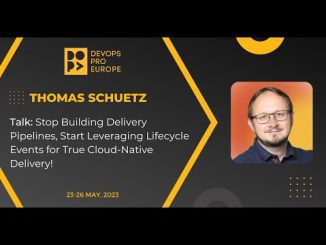
The world is moving to event-driven architecture. That is also true for the apps we are building, but also the platforms like k8s. They are heavily event-driven when it comes to reacting to new deployment/config or changes in workloads.
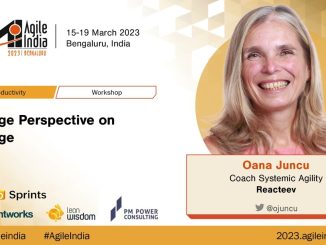
After having prototyped and implemented Agility at team level, many organizations particularly focus on scaling the experience at enterprise level. While there is an agreement that Agile is an effective approach for complex systems, we tend to paradoxically define Agile scaling models as if organizations were simple predictable systems, manageable by fixed frameworks.
In 2006, Esther Derby and Diana Larsen published, “Agile Retrospectives: Making Good Teams Great,” the first agile-focused guide to team continuous improvement. Time marched on. We learned some things. People told us some stories about their retrospectives, and how those meetings had wasted team time.
The idea of change scares a lot of people! The thought of being uncomfortable in a new environment freaks us out and results in us being unable to adapt. Like IQ and EQ, we need to understand the Adaptability Quotient, or AQ, to succeed in our Agile life.
Agile teams often talk about performance instead of talking about efficiency. We talk about ROI instead of continuous improvement. We emphasize monitoring over support and reporting over team protection. Why don’t we give back agility to software developers?