Videos on Scrum and Agile Project Management
When you come to a Scrum or Agile conference, you pick up new ideas that you’d like to try when you get back to work. However, you may feel like you hit a brick wall when it comes persuading your team to try the idea out. Resistance is very common in organisations large and small.
Do you know situations where the team spirit and/or quality of results were decreasing? This might have been complex situations and maybe it took a lot of time to fix it. But did it change on a long term? I suggest an easy to use way with all team members to get and stay in a continuous improvement loop.
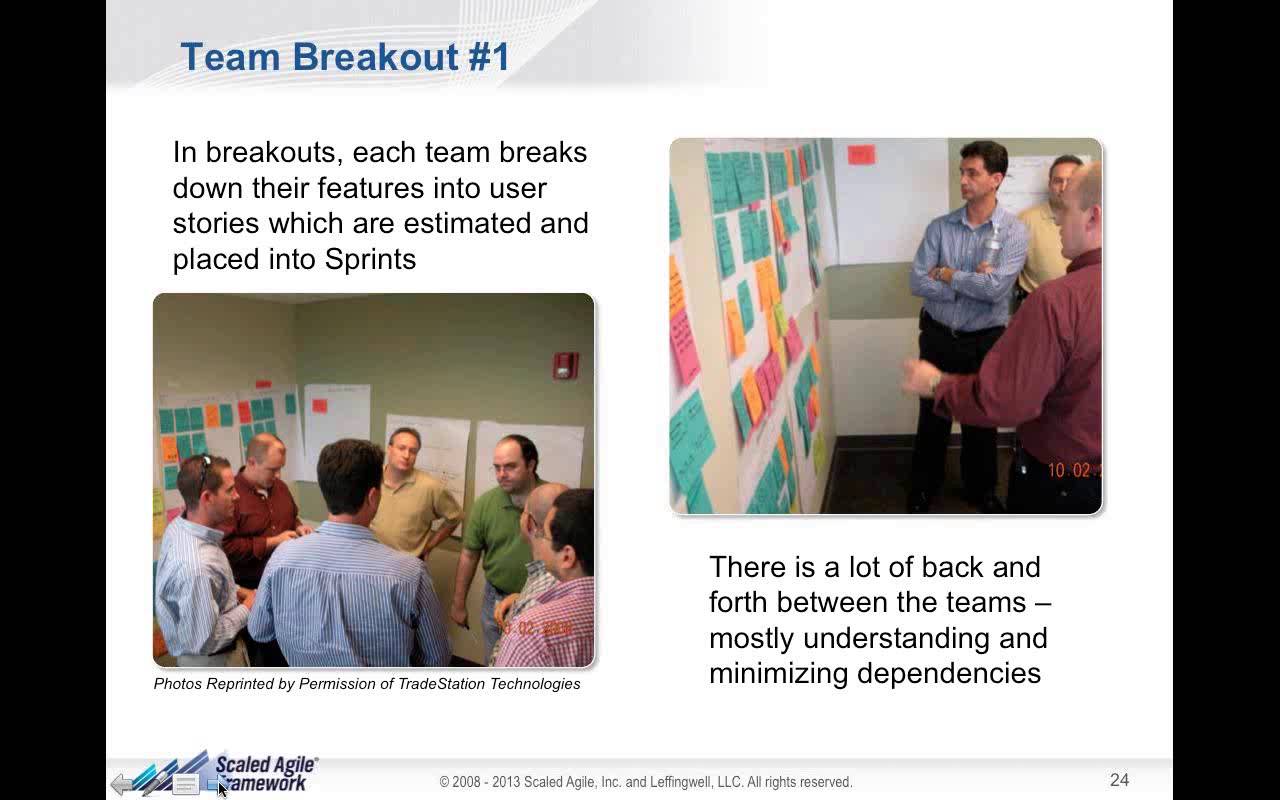
This presentation will help you understand what it takes to run a successful agile release planning meeting. The release planning is the “pacemaker” of enterprise agility and the Agile Release Train (ART) which aligns the Agile program to a common mission. Based on nearly a decade of experience, Dean Leffingwell and Scaled Agile have developed a process which has worked with small trains of 40 people to larger trains of 180. This video explains what it takes to run a successful Agile release planning meeting from a scaled point of view (100′s of teams).
Rich Hickey has stated “The simpler solution is going to kick your butt”, Russ Miles would go further, “The simpler solution is already kicking your butt; no one is more agile than the teams developing with simplicity in mind”.
Agile is founded on people and interactions. This presentation will explain a model to align teams for high performance and give you practical techniques, adapted from clinical hypnosis, that have proven successful with project visioning, goal setting, improved team communication and business collaboration.
How often did you meet a situation when everybody knows about an issue, at retrospective everybody agrees that it should be resolved, but next retrospective brings the same issue and the same action items? Why team of mature developers cannot change a situation on a project, cannot apply new practices or fail to apply innovations? Let me explain it on real project example and get you to the root cause, go from best practices to basic principles and back.
You have been doing Agile and Scrum for a few years now. With a regular cadence you have retrospectives and a lot of problems and great improvement opportunities are raised but nothing seems to really improve. Stop doing retrospectives!