Videos on Scrum and Agile Project Management
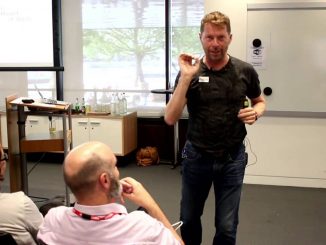
Lear how to use the Theory of Constraints to scale Agile and Scrum development teams. The Theory of Constraints is a methodology for identifying the most important limiting factor (i.e. constraint) that stands in the way of achieving a goal and then systematically improving that constraint until it is no longer the limiting factor. While implementing Scrum and shortening Time To Market in large financial institution we were slowed down because of obstacles in planning and analysis. I came with the idea to use Theory of Constraints which helped us to calculate real TTM and gave us hints how to release faster and cheaper. Now they’re ready to change direction anytime and do releases more often. This presentation is suitable for people in organizations trying to lower workload of releases. Video producer: http://swanseacon.co.uk/
With Agile practices becoming more and more common, the call for Product Leadership has never been louder. Product owners are drowning in feature alignment and internal stakeholder discussions, slowed by technical and organizational complexity, crippled by a risk-averse company culture and focused on internal risks rather than market outcome. Long ago the Samurai learned that Agility in itself is not enough. Leadership comes from an unwavering vision, clear values and relentless exercise of martial practices (kata).
“Agile has become overly decorated. Let’s scrape away those decorations for a minute, and get back to the center of Agile.” The Heart of Agile is a fresh look at Agile that strips away a lot of the cruft that has built up over recent years. Collaborate, Deliver, Reflect, Improve. Alistair Cockburn goes over the addition of kokoro onto the shu-ha-ri sequence, and its implications for agile.
Resistance to change is part of the human condition and overcoming this resistance is part of adopting Agile & Scrum and changing the way delivery teams work together. A large part of the prevailing certified methods are about tackling this problem in a variety of ways. How successful these methods are depends on many things and not least the starting conditions and senior leadership support. Without this kind of safety net creativity is called for and Tony Heap talks here about his experiences with a less head on approach to influencing things.
How do we actually know if our Agile teams are doing well? Is gut instinct enough? Furthermore, in a rapidly growing organization such as Spotify, how can we ensure some sort of consistency in our baseline level of Agile knowledge across the technology, product, and design organization?
Anti-Patterns are like patterns, only more informative. With anti-patterns you will first see what patterns reoccur in “bad” retrospectives and then you will see how to avoid, or remedy, the situation.
This is not a talk about Scrum teams. This is a talk about you and your role in developing a great team. No matter whether you are a Scrum Master, Project Manager or CTO, at least part of your job is to help your team or teams grow. In order to make this happen you need to work on two levels: The Zen Level and The Operational Level.