Videos on Scrum and Agile Project Management
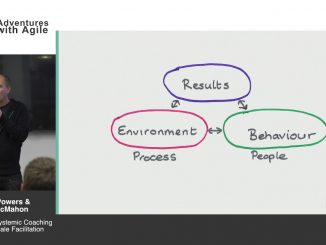
Learn how to promote self-organization in Scrum through systemic coaching and large-scale facilitation. Systemic coaching is a methodically guided self-reflection to consider systemic contexts of a concern from different perspectives.
Agile development starts with small Scrum teams tackling small problems. After some initial successes the organization gets more ambitious, and tries to scale Agile, getting more teams tackling bigger problems. At some point these endeavors run headlong into finance and governance structures from a different era, designed with huge projects in mind, and it usually doesn’t end well.
For decades, product development has been focused mostly on the speed and efficiency of delivery. So now we are stuck in the quagmire of talking about the methods and activities of delivery rather than focusing on the actual goal – delivering high value to the customer.
Many people, even the people supposedly using Agile, have too much work to do. You have project work. You have support work, formal for customer support or sales, and informal for your colleagues. You have reports to write or file, time cards to fill out, or other periodic events. You know your multitasking is slowing down your work, making you crazy, and making it difficult to deliver your best work. You need a way to say no to more work.
Agile and Scrum were supposed to free us from management: self-organized, cross-functional teams who get stuff done without that old-guard hierarchy. In this fauxtopia, some software developers were more equal than others. Can we get the healthy parts back without the Lumberghs? To bring back healthy engineering management, we must first de-mystify and de-stigmatize the concept of management.
Imagine you are asked to sit in on a team’s sprint review and retrospective. The team has been having difficulty forming and the Scrum Master has asked you to observe the team dynamics during these two sessions. Are you simply going to watch what’s going on or is there more you can do? Perhaps you are seeing interactions and team dynamics at play without truly realizing what you are observing.
Are you sick of seeing your Scrum team treated as a sausage machine for turning user stories into code? Can your software developers only talk about how long something will take, or how exactly it will be built?