Tools for Scrum and Agile Project Management
Developed by Atlassian, Jira is a commercial issue tracking tool that allows bug tracking and Agile project management. It is one of the most-widely used tool by Scrum teams working in corporate Agile software development environments.
There are still many open source kanban tools available, contrary to open source projects for Scrum tools that have mostly ended being transformed in a limited offer that supports a main commercial product. The simplicity of the Kanban approach has allowed open source software developers to create and maintain Kanban tools based on various platforms.
Agile approaches like Scrum recommend a “just enough” attitude in software development and this is also the case when you discuss tools. Ideally, you would work with a small team that is collocated, but this is not always possible and you might be running your project virtually with a distributed Scrum team scattered around the world.
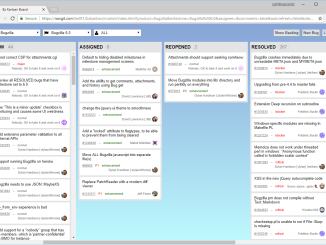
Bugzilla is a popular open source bug tracker created originally by the Mozilla Foundation. It has an open architecture that allows extending its basic functionalities. This article lists the Bugzilla plugins, called add-on in Bugzilla, that allows integrating an Agile project management approach like Scrum or Kanban around the bug tracking features of Bugzilla.
Technical debt is a metaphor coined by Ward Cunningham in 1992. This concept refers to the work that needs to be done so that a software development project could be considered as “complete”. Could you try to measure your amount of technical debt? Could you use some tools to do this? These are some of the questions that this article explores.
In the context of software development, Kanban is an approach based on Lean that tries to limit waste and work in progress to the actual capacity of the software development team. The aim of Kanban is to create a context that balances capacity and demand through a value stream and promote visual project management.
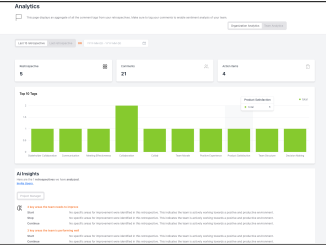
In the world of Agile tools, there’s no shortage of options for running a retrospective. From digital whiteboards to feature-packed platforms, the choices can be overwhelming. But when it comes to actually driving team improvement, not just collecting comments RetroTeam stands out.