Articles, Blog Posts, Books and Quotes on Agile Project Management
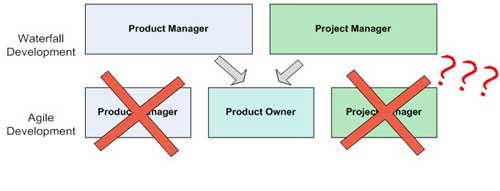
Product Management practices remains a skill difficult to pin down in its scope and responsibility. This article discusses how Product Management can exist within an Agile-oriented organization. It explains that it is an organizational level activity with responsibilities, decision-making and influences far beyond the scope of the software itself. Without the Product Manager, the Product Owner cannot do his job, as the business context for the software solution is lost.
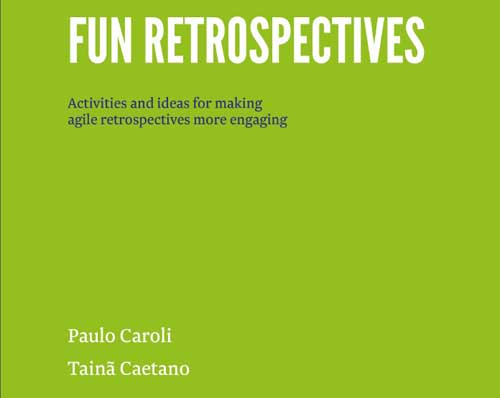
If you are following an Agile approach to project management like Scrum, you should have adopted a continuous improvement practice. Retrospectives are the name of the meeting when the Scrum team makes a pause to think on how to improve its current. Fun Retrospectives is a book that should help you to animate these meetings.
If the Agile Manifesto prefers responding to change over following a plan, it is not against planning. In this article, Raju Kidambi explains why it is important to use Scrum during the pre-project planning phase.
After having heard a lot of time that Scrum is dead, Andrew Kallman and Ted Kallman explain why this is not the case. They start by writing that there is “nothing magical about Lean, or for that matter, Agile or any project methodology”. Based on job posting statistics, there is still a strong demand and interest for both traditional and Agile leaders.
One of values of the Manifesto for Agile Software Development is that you should prefer “responding to change over following a plan”. This introduces a lot of uncertainty in Scrum projects. In his book “Executable Specifications with Scrum”, Mario Cardinal explains that to manage this uncertainty, you have to build your project on a stable platform.
In Scrum, the velocity is defined as amount of work that the team can handle in one sprint. This is an important measure as it is used to plan the future iterations and to verify that the team is progressing at a constant and comfortable pace. In this blog post, Agile coach Rachel Davies presents a FAQ on how to calculate velocity.
The role of the coaches and ScrumMaster is to give feedback to the members of the Scrum teams. In this article, Francesco Attanasio proposes a model based around the FEELING acronym: Facts; Emotions; Encouragement; Learning; Implications; New Goals.