Articles, Blog Posts, Books and Quotes on Agile Project Management
Sprint retrospectives are an important tool for Agile software development teams that want to implement continuous improvement and adjustment to their working context. In this article, Jesus Mendez provides some techniques that could help improving the outcome of your Sprint retrospectives.
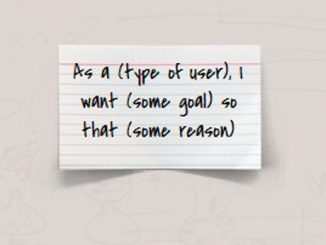
The creation of Agile approaches was also a reaction against huge and useless requirements documents, either textual or using modeling techniques like UML. All the values of the past should however not be discarded in the requirements activity. In his book “Agile Software Requirements”, Dean Leffingwell explains how user stories are different from use cases and software specifications.
Using an Agile approach for software development does not necessarily guarantee success. As Henrik Kniberg wrote at the beginning of his blog post ” Even if the entire organization is neatly organized into scrum teams, you can still end up with an unaligned mess!”. Having an Agile leader can help preventing the unaligned mess.
The Minimum Viable Product (MVP) is defined in Wikipedia as “a product which has just enough features to gather validated learning about the product and its continued development.” In this article, Sergiy Andriyenko proposes fives rules to apply successfully a Minimum Viable Product strategy.
If the basic principles of the Agile Manifesto and the Scrum framework are simple managing global Agile software development projects in the corporate world is sometimes more complex and complicated. This article lists some approaches that have been created to answers the specific questions raised by scaling Agile practices in large organizations.
If agile started as a software development movement, the customer has been at the center of its values since its initial statement. The usage of agile and lean has now widespread beyond the IT world. In her book “Being Agile in Business”, Belinda Waldock explains the agile and lean approaches from a business perspective.
The frontier is somewhat thin between analyzing things for continous improvement in Agile and blaming people for failure. In this blog post, John Allspaw discusses how Etsy wants to consider mistakes, errors, slips or lapses with a perspective of learning. he explains how having blameless post-mortems on outages and accidents are part of this approach.