Books on Scrum and Agile Project Management
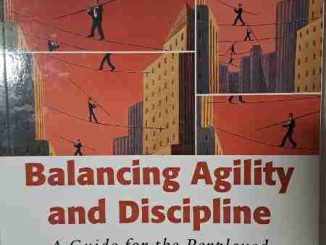
Balancing Agility and Discipline is a book written in 2004 by Barry Boehm and Richard Turner. The fact that it is already on its 6th reprint tells something about its value. This is a very pragmatic book that tries to put in perspective agile and plan-driven software development approaches.
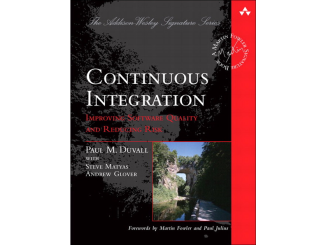
As a software developer, you know that one of the critical period in a project is when you try to make integrate your code in the overall application and push it towards the final user. It is sometimes a long process that you would like to accelerate so that you could obtain a quicker feedback on the quality of your code.
The book Introduction to Agile Methods by Sondra Ashmore and Kristin Runyan has the goal to provide an introduction to the wide landscape of Agile software development approaches. A very ambitious goal in my mind.
The Agile Analytics book aims to provide an adaptation of the Agile development approach to the specific characteristics of Datawarehouse (DW) and Business Intelligence (BI) systems development. The book is divided into two parts.
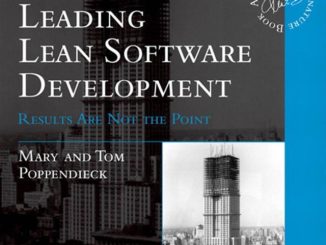
What fascinates me the most in the Lean software development approach is the quality of the people that support it. Mary and Tom Poppendieck are not an exception to this rule. Their book “Leading Lean Software Development” achieves the seemingly contradictory goals of being very insightful but still easy and captivating to read.
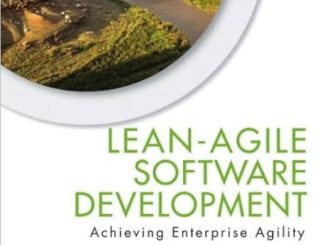
The goal of the book “Lean-Agile Software Development – Achieving Enterprise Agility” by Alan Shalloway, Guy Beaver and James R. Trott, is to propose a vision of Agile software development that goes behind the current practices, more specifically Scrum, to integrate the principles of Lean development.
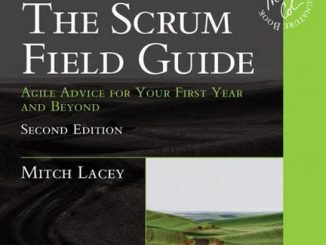
Scrum offers minimal guidelines for Agile project management. In his book “The Scrum Field Guide”, Mitch Lacey provides Scrum practitioners with material that should help them improve their Scrum practices.