Articles on Scrum and Agile Project Management
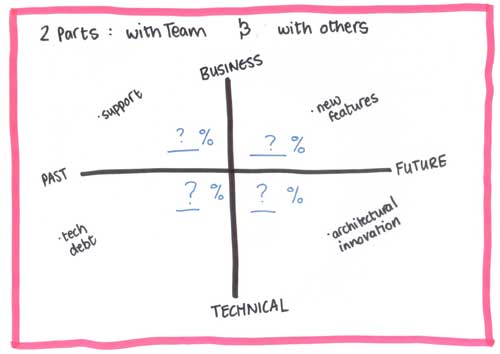
The product backlog might be the more important item for a Scrum team as it represents the business value that the project should deliver to its customers. Putting a priority on the features and user stories is however not always easy for the product owners, especially if they are dealing with multiple stakeholders. In this article, Samantha Laing shares a technique that can help to improve the results of this activity.
When you start scaling Agile, you might need more metrics to assess you software development process. In this article, Janani Rasanjali Liyanage proposes some metrics that adhere to Lean and Agile principles to measure business agility in terms of predictability, reliability and adaptability.
This article examines the Agile myth that constant process improvement is imperative. It discusses the fact that if you need to continuously observe your process, you should wait for the pauses between iteration to perform process improvement.
In this blog post, Ralf Westphal explains how functional design and test-driven development (TDD) are the techniques that allows to bridge the gap between requirement and code in Agile.
If we often associate Agile mainly with project management, the principles of the Agile Manifesto can also be applied to other software development activities. In this article, Nadya Knysh explains how to use these principles in mobile software development and more specifically in the testing of mobile apps.
Adopting new software development approaches like Agile and Scrum is always a challenge. There is a natural tendency for part of an organization to resist changing and some prejudices exist against Agile, mainly due to a lack of knowledge. This article discusses these misconceptions and provides some tips on how to overcome these prejudices to get Agile adoption on track in your organization.
As Scrum is the most popular framework adopted by organizations adopting an Agile approach for project management, many companies are trying to find financial facts that justify its adoption. This article discusses the topic of evaluating the return on investment (ROI) of using Scrum and Agile project management approaches. It suggests some hints about mistakes to avoid and on how to get meaningful results from this activity.